Your child opens a bright workbook and the pages look cheerful and full of promise, but ten minutes later the pencil stops, the page is half blank, and the morning has turned into a standoff at the kitchen table. You bought a curriculum that was meant to make math easier, and now you are wondering if you bought the wrong one, or if your child simply hates math. If you feel worried that one wrong choice could waste a whole school year, you are not alone in that feeling. This prodigy math vs horizons math guide gives you a clear answer, and the one question that settles it is not about price or about which one looks more fun on the shelf. It is about whether your child needs a teacher led lesson in a workbook first, or playful practice first to build the habit of doing math at all. Horizons Math is a colorful spiral workbook curriculum for homeschool families, covering kindergarten through grade 12, while Prodigy Math is a free to play fantasy game for grades 1 to 8 where children answer adaptive math questions to win wizard battles, collect pets and earn gear. If your child can work on their own, likes visual pages and thrives on a challenge, Horizons is the stronger pick. If your child avoids math practice, needs motivation, or needs to build fluency before anything else, Prodigy is the stronger pick. Many families pair them, Horizons for the daily lesson and Prodigy for the daily practice, and this guide shows you when that pairing works, when it wastes money, and how to decide in one honest look at your own child.
What each one is
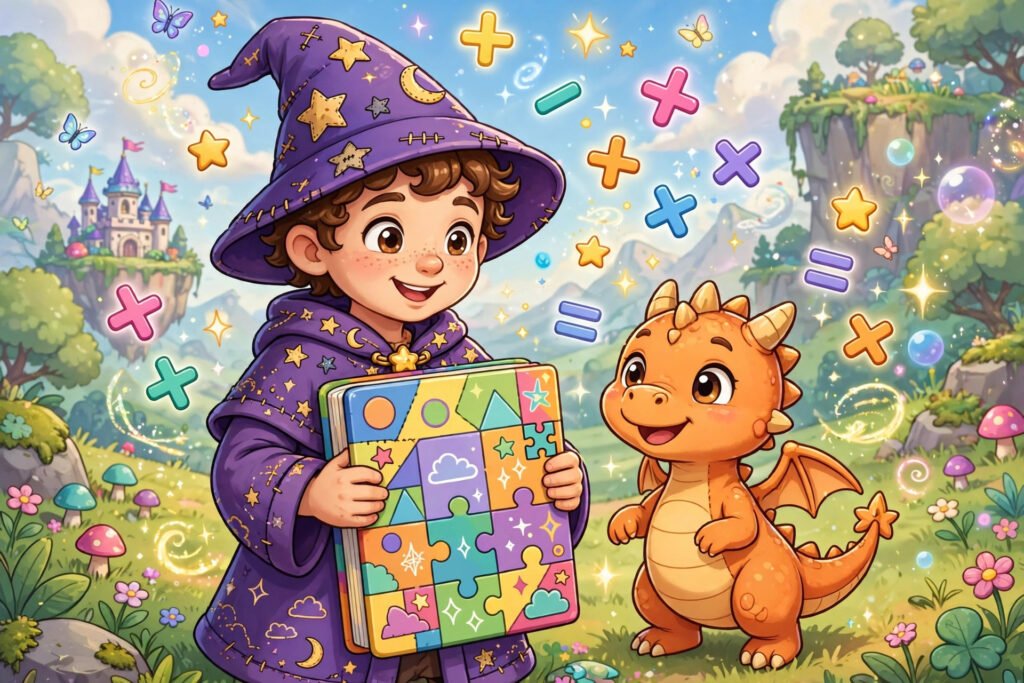
Prodigy Math is a role playing game first and a math tool second. A child creates a wizard, explores a fantasy world, and answers math questions to win battles, earn gear and collect pets. The questions adapt to the child level and cover the full math curriculum for grades 1 to 8, from counting and place value to fractions and pre algebra basics. A parent or teacher can set which topics appear, and the game is free to play, with an optional parent membership for extra game items. The math itself never sits behind the paywall. Children play it because it feels like a game, not because it feels like school, and that feeling is the whole point of Prodigy. It turns practice into play, and for a child who avoids math, that change alone can be worth a great deal.
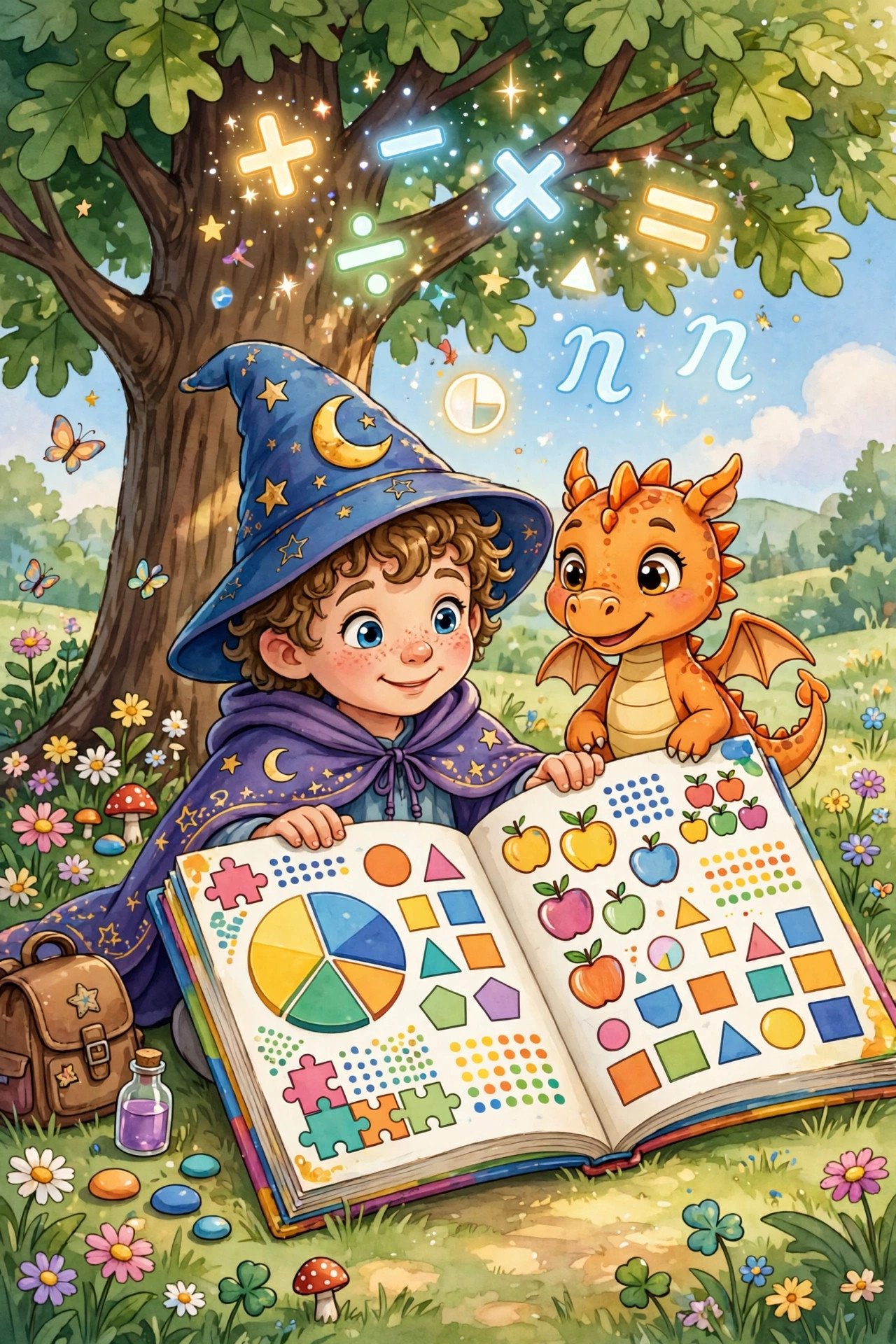
Horizons Math is almost the opposite kind of product. It is a Christian homeschool curriculum from Alpha Omega Publications, and it teaches math through short lessons in colorful student workbooks. A grade box set includes two student workbooks and a teacher guide, and the child works through the pages in order, one lesson at a time, with the parent leading the lesson. The workbooks are bright and visual, with pictures and color on the page, and the lessons move quickly from one idea to the next. It covers kindergarten through grade 12, so a family could in theory stay with the same program from the first year of school to the last. It is not aligned with Common Core standards, it follows its own order and its own pace, and it often runs above the expected level for the child grade, which means a child may meet ideas earlier than a school child would. A teacher guide is included and there is no script, so the parent leads the lesson independently and explains each idea in their own words. Horizons suits a child who can work on their own, likes visual pages and thrives on a challenge. It may move too quickly for a child who needs more time on one concept, and it includes occasional Christian references in word problems, which may not suit secular families. But knowing what each one is does not tell you how a lesson actually feels, so let us look inside a lesson next.
How the teaching works
Prodigy teaches through play and repetition. A question appears as part of a battle, the child answers, and a correct answer casts a spell. The game adjusts difficulty as the child plays, so a struggling child gets easier questions and a strong child gets harder ones. The practice feels like play, which is why reluctant students often do far more of it than they would with a workbook. A child can answer dozens of questions in one sitting without noticing the count, because each question is a step toward a pet or a piece of gear. That volume is the greatest strength of Prodigy, because fluency grows when a child meets the same kind of question again and again until the answer comes fast. But the game cannot explain an idea the way a person or a good book can, and it cannot tell why a child made a mistake. It can only ask the question again later. Prodigy is strongest as practice and motivation, not as a first teacher of new ideas, and a parent who expects the game to teach a brand new topic from zero will be disappointed.
Horizons teaches through a spiral approach. A topic is introduced, the child practises it for a short time, and then the lesson moves on. Later, the same topic comes back at a higher level, with more depth and more challenge. That spiral is the heart of the program. It keeps ideas fresh by revisiting them again and again through the year, instead of teaching one idea for weeks and then leaving it behind. Lessons are short and fast paced, so a child does a little of many things in each sitting rather than a lot of one thing. The colorful workbooks help here, because a visual child can see the idea on the page, follow the pictures, and stay with the lesson even when the pace is quick. The parent leads each lesson, using the teacher guide for the answers and the teaching notes, but there is no script to read aloud, so the parent explains the idea in their own way and checks the child work as they go. That independence is a strength for a confident parent and a confident child. It is also a real demand on the parent, because the lesson does not teach itself. A child who likes variety and challenge will enjoy the spiral, because every day brings something new and the work never feels stale. A child who needs to stay with one idea until it is fully secure may feel rushed, because the spiral moves on before the idea has settled. The program also includes occasional Christian references in word problems, so a secular family should look at a sample lesson first and decide if that content fits their home. Short lessons. Bright pages. Quick pace. Regular review. That is the Horizons pattern, and it either fits your child or it does not. So which one costs more over a full year, and where does the money actually go?
Cost compared
| Feature | Prodigy Math | Horizons Math |
|---|---|---|
| Free version | Yes, full game and all math free to play | No, workbooks and teacher guide are paid |
| Paid cost | Optional membership for game extras | About 90 to 120 dollars a grade box set, check the current price before you buy |
| Print books | None, online game only | Two colorful student workbooks per grade, consumable |
| Teacher guides | None needed, the game teaches through play | Teacher guide included in the box set, no script |
| Grades | Grades 1 to 8 | Kindergarten through grade 12 |
| Best for | Motivation and practice volume | Daily lessons with variety and challenge |
Cost is the simplest difference, and it is also the easiest one to misunderstand. Prodigy is free to play, so a family can start today at no cost and the math never asks for a card. An optional membership adds game extras only, such as extra pets and gear, and it is not needed to practise math. Horizons is a paid curriculum of printed workbooks, and the price is set per grade. One homeschool parent review put a grade box set at 120 dollars including two student workbooks and the teacher guide, with extra workbooks at 38 dollars 75 cents each. The Prodigy blog put the price range near 90 dollars per math set. Those two numbers do not match exactly, and that gap is the point. Prices vary by seller, by grade and by year, so check the current price before you buy, because a price from last year is not a promise. The workbooks are consumable, which changes the real cost a great deal. A child writes in the workbook, so the same set cannot be passed down to a younger child in clean form, and a family with two or three children will need a new set of student workbooks for each child. The teacher guide can be reused, and that helps, but the student pages are the part you buy again. A family that only needs math practice would pick Prodigy and spend nothing. A family that wants a full daily lesson in a bright workbook may find Horizons worth the price, because nothing free gives you that printed lesson structure with a teacher guide. Remember too that the real cost is also your time, and the time each program asks for is very different. But price means little if the program does not fit your child age, so let us check grades next.
Grades and ages
Prodigy covers grades 1 to 8, and it is strongest across the whole elementary range and into middle school because it teaches topics, not only facts. A child in grade 1 can play it, and a child in grade 8 can still find questions at their level. The game follows the child, so a younger child gets gentle questions and an older child gets harder ones, all inside the same fantasy world. Horizons covers kindergarten through grade 12, which is a much longer road. A family could in theory stay with Horizons from the first year of school to the last year, moving from one grade box set to the next, and the spiral would keep revisiting ideas at a higher level each year. That range is one of the reasons homeschool families choose it, because they do not need to change programs every few years. In practice, the choice of grade matters more than the range. Horizons often runs above the expected level for the child grade, so a child may find the work harder than the grade label suggests. That is good news for a strong child who needs a challenge, and it is a warning for a child who is already finding math hard. A parent who buys the grade that matches the child age may find the work too hard, while a parent who buys one grade below may find the fit is just right. The early grades use bright pictures and short lessons, and a young child can enjoy the visual pages even before they can read every word alone. The later grades suit an independent learner who can read the lesson, work through the workbook pages, and come to a parent only when stuck. Horizons is not aligned with Common Core standards, it follows its own order, so a child may meet a topic earlier or later than a school child would, and a parent who needs to match a school test exactly should check the order first. If your child is in the elementary years and you want one program to carry them through to grade 8, Prodigy fits the age band exactly. If your child is past grade 8, Prodigy stops, and Horizons keeps going. If your child is younger and loves bright pages and quick lessons, Horizons can start them on math with color instead of a dull worksheet. Age is only half the story though, because a child who is behind needs the opposite of a child who is ahead.
For a struggling student
For a child who is falling behind, Prodigy is usually the safer first step, and Horizons on its own is usually the wrong one. A struggling child needs confidence, easy wins and lots of low stakes practice, and Prodigy gives all three. A wrong answer in a game is just a lost battle, not a failed test, and the game quietly drops the difficulty until the child succeeds. The child keeps playing because the game keeps rewarding effort, and the math practice piles up without a fight. Horizons does the opposite at first. It asks a child to keep up with a fast pace, to move on from a topic before it feels secure, and to meet the same idea again later at a harder level. A child who needs more time on one concept may feel that pace as one more way to fall behind, because the spiral does not wait. The lessons are short, which helps a child who tires quickly, but the speed of the spiral can still leave gaps if the child never gets the extra time they need on a hard idea. That does not mean Horizons has no place for a struggling child. It means the order matters. Start with Prodigy to rebuild the habit and the confidence, and bring Horizons in later, once the child is at grade level and ready to keep up with the spiral instead of just surviving it. When you do start Horizons, start one grade below the child level, sit beside your child for the lesson, and use the teacher guide to check each step before you move on. Keep the sessions short, praise the effort, and let Prodigy supply the extra practice on the same topic after the workbook is closed. A child who plays Prodigy for fluency and works through Horizons with a parent for the lesson gets both safety and structure, and that pairing is one of the best uses of the two together. Give the struggling child wins first, understanding second, and the workbook third, and the confidence will follow. But what if your child is not behind at all, and the problem is the opposite?
For an advanced student
For a child who is ahead, Horizons is one of the most interesting choices a parent can make, and Prodigy alone will not be enough. An advanced child does not need more easy questions. They need ideas that make them stop and think, and Horizons is built to give them that stretch. The program often runs above the expected level for the child grade, so a strong child meets ideas early and gets a real challenge from the workbook. The spiral helps here too, because a strong child revisits an idea at a higher level and sees new depth in it, instead of repeating the same easy sums. The colorful workbooks suit a visual learner, and a child who likes visual pages will enjoy working through them. A child who can work on their own will thrive, because the lessons are short, the teacher guide is there when needed, and the child can move at their own speed through the pages. The range to grade 12 also matters for an advanced child. Prodigy ends at grade 8, so a strong student will outgrow it, while Horizons keeps going into the high school years. Prodigy still has a role for an advanced child: it keeps the basics fluent, it gives quick daily practice, and it is the fun break between harder sessions. But if you buy only one, and your child is advanced, buy Horizons. If your child wants video teaching on top of a workbook, or a program that explains each lesson on screen, compare Prodigy Math vs Teaching Textbooks before you decide, because that comparison shows when a screen led lesson fits better than a parent led workbook. An advanced child who works through Horizons for depth and plays Prodigy for speed gets both kinds of strength, and neither program alone gives that mix. So how does each one fit into a real day at home?
At home
At home, the choice depends on parent time and child need, and the two programs ask for very different kinds of time. Prodigy at home works on its own: the child plays, the game adapts, and the parent can check progress in the parent dashboard. It needs almost no parent time, which is why busy families love it. A child can play for fifteen or twenty minutes after school, the math happens, and the parent can cook dinner or help another child in peace. Horizons at home works best when a parent is nearby, at least at the start of each lesson. The teacher guide is included and there is no script, so the parent leads the lesson independently, explains the idea, and checks the workbook as the child works. That is real time, maybe twenty or thirty minutes a day, but it is also real connection, and many parents say the workbook discussions are the best math conversations they have with their child. For an independent learner who can read alone, the later Horizons books need far less parent time, and a child can read the lesson, work through the colorful pages, and come to a parent only when stuck. That independence is one of the reasons Horizons suits homeschool families so well: the lesson is on the page, the teacher guide is on the shelf, and the child can carry the workbook to a chair and work. If you have the time and the child is ready, Horizons gives you something to talk about. If you need math to happen while you cook dinner, Prodigy gives you that. The honest test is your week, not your wish. Look at the last seven days, count the evenings you could sit and lead a lesson, and pick the program that fits the week you actually live. So with all of that in mind, which one should you actually pick?
Which one should you pick
Pick Horizons if your child can work on their own, likes visual pages and thrives on a challenge, and you can sit with them to lead the lesson at the start. Pick Prodigy if your child avoids math practice, needs motivation, is behind grade level, or you need something that starts today with no setup and no cost. Pick both if you want the best of each: Horizons for the daily lesson, Prodigy for the daily fluency and the fun. That pairing is the answer most families land on, and it works because the two programs cover the weak spots of each other. Horizons teaches, Prodigy practises. Horizons gives the lesson and the review, Prodigy gives the game and the volume. Use Horizons three or four times a week for the lesson, and Prodigy for ten or fifteen minutes a day for the practice, and check the current price of the next Horizons box set before you buy it, because prices vary and a new set should never be a surprise. Do not buy the full set of grades at once. Buy one box set, work through it together, and let the reaction of your child decide the next step. If your child races through Horizons and asks for harder work, that is your answer, and the next grade is waiting. If your child finally does math without a fight because of Prodigy, that is also your answer, and you have already won. If you want a print program with more repetition and review instead of the Horizons focus on speed and variety, compare Prodigy Math vs Saxon Math, and if you are building a full homeschool plan around either choice, read Prodigy Math as a homeschool math curriculum. The choice is not forever. Start with the free one this week, add one Horizons box set next week, and watch your child for two weeks. The child will tell you which one to keep. Still unsure about one detail? The questions below answer the ones parents ask most.
Frequently asked questions
Is Horizons Math a complete math curriculum?
Yes, it is a complete curriculum for homeschool families, covering kindergarten through grade 12 with a spiral approach that revisits topics at a higher level. It is not aligned with Common Core standards and it follows its own order, so check the order first if you need to match a school test.
Can you use Prodigy and Horizons Math together?
Yes. Many families do: Horizons for the daily lesson and Prodigy for daily practice and fluency on the same topics. Prodigy own blog lists Horizons among leading homeschool math programs and calls Prodigy a good standalone program or enrichment tool beside any homeschool math program.
How much does Horizons Math cost?
One homeschool parent review put a grade box set at 120 dollars including two student workbooks and the teacher guide, with extra workbooks at 38 dollars 75 cents each. The Prodigy blog put the price range near 90 dollars per math set. Prices vary, so check the current price before you buy.
Is Horizons Math good for a child who needs more time on one concept?
It may move too quickly for that child. Lessons are short and fast paced, and the spiral moves on and revisits the topic later at a higher level. Start one grade below your child level, sit with your child for the lesson, and use Prodigy for extra practice on the same topic.
Is Prodigy free?
Yes, the game is free to play. An optional parent membership adds game extras, but it is not needed to practise math. Prodigy covers grades 1 to 8.
Related guides
- Prodigy Math as a homeschool math curriculum
- Prodigy Math vs Saxon Math
- Prodigy Math vs Teaching Textbooks
This site is an independent guide. It is not the official Prodigy site, and it is not affiliated with Prodigy Education.